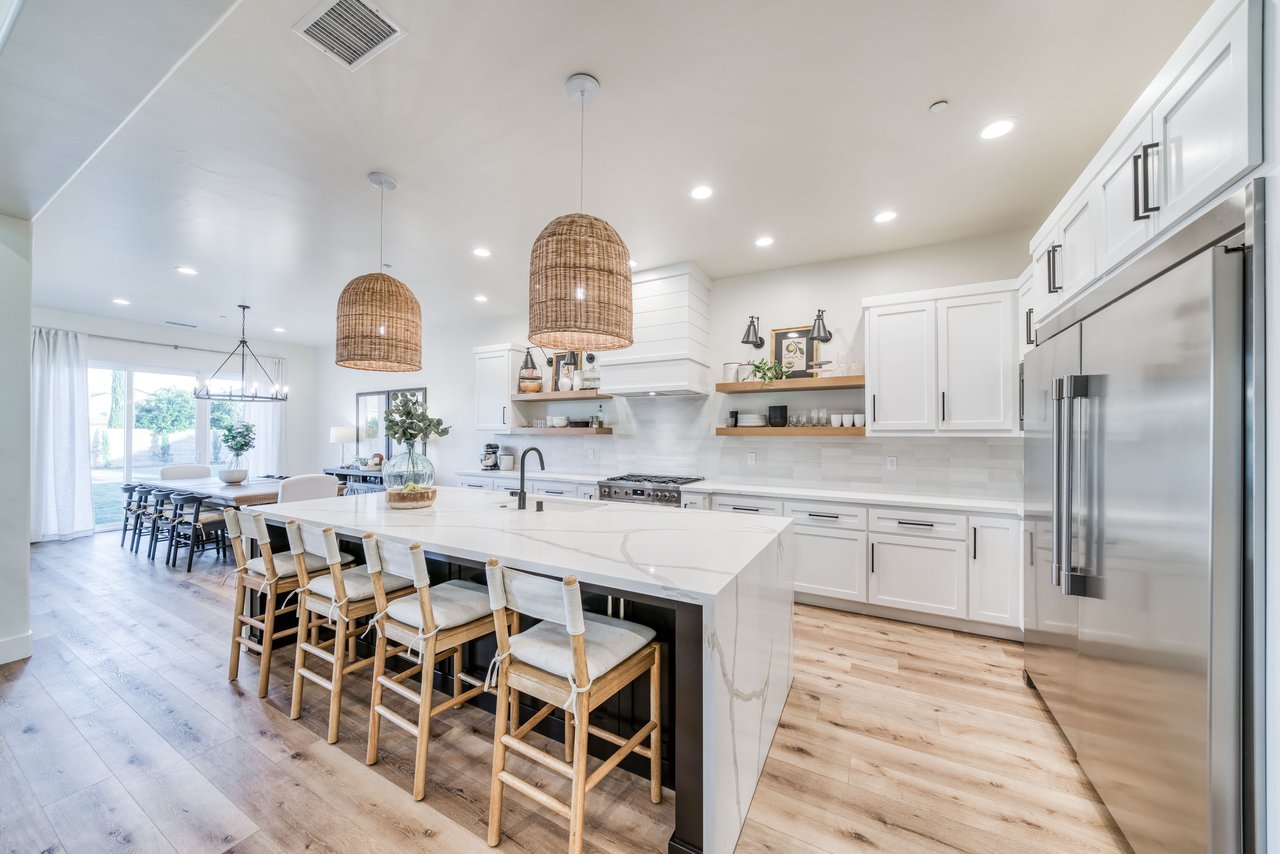
Buying New Construction in Fresno & Clovis in 2026: Why You Should Bring Your Own Real Estate Agent
Walking into a beautiful model home is easy.
Understanding what you're actually buying—and what it will really cost—is a different story.
If you're considering a new construction home in Fresno or Clovis, California, 2026 has created some interesting opportunities for buyers. Builders are competing for buyers with incentives that can include mortgage rate buydowns, closing-cost credits, owned solar, design credits, upgrades, appliances, and other financial incentives.
Some of those incentives can be worth tens of thousands of dollars.
But there is something I want buyers to understand before they ever walk into a builder's sales office:
The builder has representation. You should consider having your own representation, too.
The salesperson sitting inside the model-home sales office works for the builder.
There's nothing wrong with that. That's their job.
But their job and your real estate agent's job are not the same.
At The Clayson Group at Real Broker, when we represent a new-construction buyer, our focus is the buyer—the purchase price, incentives, financing, lot, upgrades, inspections, contract, future resale considerations, and the true cost of owning the home.
And right now, understanding those details can potentially be worth a lot of money.
Do You Need a Real Estate Agent When Buying New Construction?
You aren't necessarily required to use your own real estate agent to purchase a new construction home, but having buyer representation can give you someone focused specifically on your interests rather than the builder's.
This is one of the biggest misconceptions I see with new homes.
Buyers walk into a model home, meet a friendly salesperson and think:
"They're going to help me buy the house, so why would I need my own agent?"
Because the builder's representative represents the builder's side of the transaction.
Your buyer's agent represents your side, subject to your representation agreement and applicable California law.
Those are different roles.
Your agent can help you evaluate the builder's offer, compare communities, understand incentives, analyze the lot and location, review comparable resale properties, coordinate inspections, and help you understand what you're giving up—or gaining—by choosing new construction.
Bring Your Real Estate Agent on Your First Visit
This is important.
Talk to your real estate agent before visiting a new-home community, and ideally bring your agent with you on the first visit.
Builder policies differ, but some require the buyer's agent to accompany or register the buyer at the beginning of the relationship.
For example, Granville's current Agent Alliance terms say an agent must register the client before the client's first meeting with a Granville sales representative or accompany the client on that first visit to qualify under its program.
So don't assume you can tour model homes several times and simply bring your agent into the transaction later.
My recommendation is simple:
Call us before you go.
We'll determine the builder's current registration requirements and accompany you when appropriate.
You can still enjoy looking at the models.
You can still talk to the builder.
You just have somebody on your side of the transaction from the beginning.
Builders Are Offering Significant Incentives Right Now
This is one of the biggest reasons new construction deserves attention in the Fresno and Clovis real estate market in 2026.
Builders need to sell inventory.
They may have completed homes, homes under construction, upcoming closings, or particular lots they want sold.
Instead of simply reducing the advertised price, builders can use incentives to make a transaction more attractive.
Those incentives may include:
- Mortgage rate buydowns
- Closing-cost credits
- Owned solar
- Solar credits
- Design-center or upgrade credits
- Appliance packages
- Lot-premium discounts
- Flexible credits that buyers can allocate among different options
And the incentives can change quickly.
That's why you shouldn't evaluate new construction solely by looking at the advertised purchase price.
How Big Are Fresno and Clovis Builder Incentives in 2026?
Some current offers illustrate just how significant incentives can be.
Wilson Homes is currently advertising at its Windsor community in Clovis up to $25,000 toward closing costs or a mortgage-rate buydown when using its preferred lender, plus owned solar valued at up to $17,000—a potential advertised value of roughly $42,000.
Granville Homes currently advertises a variety of incentives depending on community and property, including up to $20,000 flexible credit at Portofino. Its promotions page also shows substantially larger flexible credits on certain luxury inventory.
These programs have deadlines, financing requirements, property restrictions and other conditions. They can also change or disappear.
The point isn't that every buyer will receive $20,000, $40,000 or more.
The point is:
Ask what is available before you negotiate the deal.
A Mortgage Rate Buydown May Be More Valuable Than a Price Reduction
This is where buyers need to look beyond the headline purchase price.
Suppose a builder offers you a choice between a price adjustment and money toward a mortgage-rate buydown.
Which is better?
It depends.
A lower purchase price is easy to understand.
But depending on the loan, interest rate, how long you plan to own the home and how the incentive is structured, using builder money to reduce your financing cost may have a greater impact on your monthly payment.
That's why we want your real estate agent and lender working together.
We can ask:
What's the actual monthly payment?
Is the rate buydown temporary or permanent?
What happens when a temporary buydown expires?
What APR applies?
Do you have to use the builder's preferred lender?
What happens if you refinance or sell?
Don't get hypnotized by a low advertised interest rate.
Understand the loan behind it.
Closing-Cost Credits Can Preserve Your Cash
Another potentially valuable builder incentive is money toward closing costs.
This can be especially helpful because purchasing a new home often creates expenses buyers didn't initially anticipate.
If the builder contributes toward eligible closing costs, you may be able to keep more money available for things like:
Furniture.
Window coverings.
Landscaping.
Moving expenses.
Appliances.
Emergency reserves.
Future improvements.
Having cash left after closing matters.
I don't want buyers draining every dollar from their account simply to get the keys.
Owned Solar Can Be a Significant Incentive
Solar is another major consideration when purchasing new construction in California.
Don't just ask:
"Does the house have solar?"
Ask:
"Who owns the solar?"
You need to understand whether the system is owned, financed, leased, included in the purchase price, or subject to another agreement.
An incentive that includes owned solar can be materially different from one requiring you to purchase or finance the system separately.
For example, Wilson's current Windsor promotion specifically advertises owned solar valued at up to $17,000 as part of its incentive package.
Granville has also recently promoted combinations of owned solar plus flexible credits on select Fresno inventory.
That's real money.
But read the terms.
Are Appliances Included With a New Construction Home?
Sometimes. Sometimes not.
This is exactly why buyers need to ask.
A model home may have:
Refrigerator.
Washer and dryer.
Upgraded range.
Premium dishwasher.
Designer lighting.
Window coverings.
That doesn't mean the home you're buying includes everything you see.
Some builders or particular inventory homes may include appliance packages or offer appliances as incentives.
Others may not.
Before comparing two houses, we want an apples-to-apples comparison of what is actually included.
A $500,000 home with thousands of dollars in included features may represent a different value from another $500,000 home where you'll have to purchase those items after closing.
The Model Home Is Not Necessarily the Home You're Buying
This deserves its own section.
Model homes are designed to sell homes.
They may contain extensive upgrades, premium flooring, custom paint, upgraded cabinets, landscaping, window treatments, lighting, furniture and design features.
Walk through the model and ask:
What's standard?
What's upgraded?
What would this exact configuration cost?
The base price on the sign may be nowhere near the price of recreating the model.
That's not necessarily a problem.
You just need to know the difference.
The Backyard Can Be a Major Hidden Expense
This is one of the biggest items buyers overlook.
You buy a beautiful new Fresno or Clovis home.
The kitchen is finished.
The bathrooms are finished.
The flooring is installed.
You walk outside...
And you have dirt.
Now you need a backyard.
Depending on what you want, that can mean:
Concrete.
Patio.
Grass or artificial turf.
Irrigation.
Drainage.
Plants and trees.
Fencing or gates.
Outdoor lighting.
Pool or spa.
Outdoor kitchen.
Pergola or covered patio.
That expense can add up quickly.
This is where new construction and resale need to be compared differently.
A resale home may already have a finished backyard, mature landscaping, patio, pool and window coverings.
A new home may look competitively priced until you add another substantial amount after closing to finish the property the way you actually want it.
The purchase price is not always the finished price.
Which Builder Upgrades Are Worth Paying For?
This is where my construction background changes how I look at a new home.
I would generally start by thinking about upgrades that are difficult, disruptive or expensive to change later.
For example:
Electrical and lighting locations.
Structural options.
Additional garage space.
Plumbing configurations.
Certain cabinet configurations.
Doors and windows.
Prewiring.
Major flooring decisions.
Cosmetic items that can be changed relatively easily later may deserve a different analysis.
A builder's upgrade price may also be substantially different from what an outside contractor would charge after closing.
That doesn't automatically mean you should wait.
Sometimes convenience, financing and warranty considerations make a builder upgrade worthwhile.
But we should compare.
Should You Get a Home Inspection on a Brand-New House?
Yes, I recommend that buyers seriously consider independent inspections even when purchasing new construction.
New does not mean perfect.
A home involves dozens of trades and thousands of components.
An independent inspector can evaluate the completed work and identify items that may need attention.
Depending on the construction stage and builder policies, buyers may also discuss whether a pre-drywall inspection or other phase inspection is appropriate.
I come from a construction background, so I naturally look at houses differently.
Beautiful countertops don't tell me whether everything behind the walls was installed correctly.
New Construction vs. Resale: Which Is the Better Deal?
There is no universal answer.
A new home may offer:
Builder incentives. New systems. Modern floor plans. Energy efficiency. Warranty coverage. Contemporary finishes.
A resale property may offer:
Finished landscaping. Established neighborhood. Mature trees. Existing pool. Window coverings. Appliances. Larger lot in some locations. More negotiating flexibility in certain circumstances.
This connects directly to our recent guide about what $500,000 buys in Fresno vs. Clovis.
Don't compare:
$500,000 new home vs. $500,000 resale home.
Compare:
The total cost of getting each property to the condition you want.
That's the real comparison.
Can Your Real Estate Agent Negotiate With a Builder?
Sometimes there is room to negotiate, but new-construction negotiation doesn't always look like a traditional resale transaction.
The builder may be more willing to negotiate:
Closing costs.
Financing incentives.
Rate buydowns.
Upgrades.
Lot premiums.
Appliances.
Solar.
Move-in-ready inventory.
than make a major reduction to the base price.
Why?
Because builders care about comparable sales within their communities.
That's why understanding the entire economic package matters.
Don't Choose an Incentive Just Because the Dollar Amount Is Biggest
Imagine a builder offers:
$20,000 toward a rate buydown.
Or:
$20,000 toward closing costs and upgrades.
Or:
Owned solar plus a smaller credit.
Which one is worth more?
There isn't enough information to answer.
Your loan, cash position, monthly-payment goals, solar terms, ownership timeline and property all matter.
This is where good representation becomes valuable.
We want the incentive that creates the most value for you—not simply the incentive with the biggest number on the advertisement.
Frequently Asked Questions About New Construction in Fresno & Clovis
Should I bring my Realtor when visiting a new construction community?
Yes, I recommend contacting your real estate agent before your first visit. Builder registration rules vary, and some programs require your agent to accompany or register you from the beginning.
Does the builder's sales agent represent me?
The onsite sales representative works for the builder or builder's sales operation. Buyers who want their own representation should discuss a buyer-representation relationship with their real estate agent.
Are Fresno and Clovis builders offering incentives in 2026?
Yes. Current advertised incentives from some local builders include closing-cost credits, mortgage-rate buydowns, owned solar and flexible credits. Offers vary by builder, community, home, lender and deadline.
Can a builder buy down my mortgage rate?
Some builders currently offer financing incentives that can be applied toward rate buydowns, often with requirements to use an affiliated or preferred lender.
Can the builder pay my closing costs?
Some current programs provide credits toward eligible closing costs, subject to program and lending restrictions.
Is solar included with a new construction home in California?
Solar arrangements vary. Some homes or promotions include owned solar, while other transactions may require separate purchase or financing. Verify the exact terms before signing.
Do new construction homes include appliances?
It depends on the builder and home. Never assume everything displayed in a model home is included in the base purchase price.
Does a new construction home come with a finished backyard?
Not necessarily. Buyers should specifically verify landscaping, irrigation, concrete, fencing and other backyard improvements included with the property.
Should I inspect a brand-new home?
I recommend buyers consider an independent professional home inspection. New construction can still have defects or items requiring correction.
Is new construction better than buying a resale home?
Neither is automatically better. Compare the total purchase cost, incentives, financing, landscaping, upgrades, property condition, location and long-term ownership goals.
The Bottom Line: The Builder Has a Team. You Should Have Your Own.
Buying new construction in Fresno or Clovis can be a great opportunity—particularly when builders are offering substantial incentives.
But don't confuse incentives with automatically getting a good deal.
You need to understand:
The price.
The financing.
The rate.
The upgrades.
The solar.
The backyard.
The appliances.
The lot.
The inspections.
The HOA and assessments.
And what the property may cost after you actually finish it.
The builder has professionals protecting its side of the transaction.
You deserve someone looking at yours.
At The Clayson Group at Real Broker, we'll help you compare Fresno and Clovis new construction with resale homes, investigate current builder incentives, evaluate the property beyond the model-home finishes, and understand what you're actually paying for.
And here's the most important advice I can give you before you start touring new homes:
Call us before you walk into the builder's sales office.
Let us help you understand the process and, where appropriate, accompany you on that first visit so your representation is established from the beginning.
The Clayson Group at Real Broker
Fresno • Clovis • Central Valley Real Estate
Builder promotions, financing programs, credits, solar offers, prices and availability can change or end without notice. Financing incentives may require use of a builder-affiliated or preferred lender and borrower qualification. Buyers should review all builder contracts, financing disclosures, HOA documents, assessments and property-specific information before purchasing.